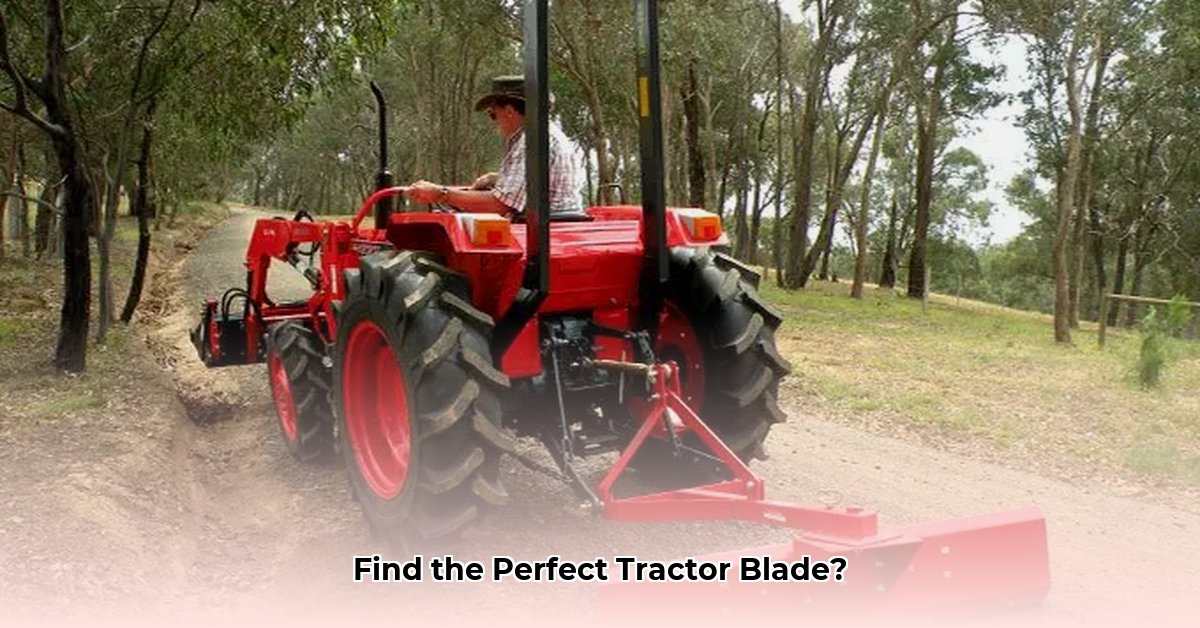
Leveling fields, building ditches, or maintaining roads—a tractor grading blade is a versatile tool for many agricultural and landscaping tasks. This guide provides a comprehensive overview to help you select, install, operate, and maintain the right blade for your needs and budget. We'll examine different blade types, crucial selection factors, and safety considerations to ensure you make an informed decision. For more information on tractor hydraulic parts, check out this helpful resource.
Understanding Your Needs: Project Assessment and Budget
Before selecting a tractor grading blade, assess your project's scale and scope. What tasks will the blade perform? Small-scale landscaping or extensive land clearing? The size and complexity of your projects directly influence the blade's required features, size and the horsepower of your tractor. A small blade on a powerful tractor might be overkill for minor tasks; conversely, a large blade on a small tractor could be dangerous and inefficient. A realistic budget is crucial, as prices vary significantly depending on size, features, and material.
Types of Tractor Grading Blades: Key Features and Functionality
Several key features distinguish tractor grading blades:
Angle Adjustment: Allows you to adjust the blade's angle of attack, optimizing material movement and grading precision. (Think of it as steering the blade for optimal results.)
Tilt Function: Enables tilting the blade left or right, crucial for tasks like ditch cleaning and slope shaping. (This adds significant versatility for uneven terrain.)
Offset Capability: Allows shifting the blade sideways, useful for working around obstacles or near edges. (Extends your reach beyond the tractor's wheels.)
Hydraulic vs. Manual Operation: Hydraulic blades offer effortless adjustment from the tractor seat; manual blades require manual adjustment, which is more time-consuming. (Hydraulic systems are more expensive initially but save considerable time and effort.)
Selecting Your Perfect Blade: A Step-by-Step Process
Choosing the ideal blade involves a series of steps:
Step 1: Tractor Compatibility: Verify your tractor's compatibility. Check the hydraulic capacity and three-point hitch specifications in your tractor's manual.
Step 2: Blade Size and Capacity: Larger blades move more material but require more powerful tractors. Choose a blade whose capacity aligns with your tractor's capabilities. (Overloading a blade is dangerous and can cause damage.)
Step 3: Material Strength: High-strength steels, such as Hardox 450, offer superior durability and longevity, though at a higher initial cost. (Consider the long-term value of a more durable blade versus the lower initial cost of a less robust one.)
Step 4: Budget: Balance your needs and desired features with your budget. Don't let extra features outweigh their practical benefit if they exceed your financial constraints.
Step 5: Intended Use: Select features (angle, tilt, offset, hydraulics) that align with your specific tasks. You don't need every feature if your projects don't require them. (Prioritize essential features for your intended application.)
Installation and Operation: A Safe Approach
Installation: Most blades attach to your tractor's three-point hitch. Consult your tractor and blade manuals for detailed instructions. (Always prioritize safety when installing and operating any equipment.)
Operation: Start slowly, gradually increasing speed as you become more comfortable. Avoid overloading the blade; multiple passes are preferable to risking damage. Regularly inspect for wear and tear. (Following safety guidelines is absolutely non-negotiable.)
Maintenance and Troubleshooting: Prolonging Blade Lifespan
Regular maintenance is crucial for optimal performance and longevity:
Routine Inspections: Inspect for loose bolts, worn parts, or damage after each use.
Lubrication: Keep moving parts well-lubricated, especially in hydraulic systems.
Blade Sharpening: Sharpen dull blades regularly to maintain efficiency.
Hydraulic System Maintenance: For hydraulic blades, check fluid levels and address leaks promptly. (Preventative maintenance is far cheaper than repairs.)
Cost-Benefit Analysis: Return on Investment (ROI)
Prices vary greatly based on size, features, and material. While premium blades cost more upfront, their longer lifespan and superior features frequently lead to a better ROI over time. (Consider the total cost of ownership (TCO), encompassing maintenance and repairs, when comparing different options.)
Safety Considerations: Prioritize Prudence
Safety is paramount:
Wear appropriate safety gear: eye protection, hearing protection, and sturdy boots.
Inspect the blade before each use.
Be aware of your surroundings: obstacles, people, and hazards.
Avoid operating near power lines or other hazards.
Always follow safety guidelines in your tractor and blade manuals. (Safety is not optional. Neglecting safety protocols can have devastating consequences.)
Choosing Your Tractor Grading Blade: Final Thoughts
Choosing the right grading blade requires careful consideration of your budget, projects, and tractor capabilities. A well-chosen blade is a valuable investment, boosting productivity and efficiency. Take your time, do your research, and choose wisely. The long-term benefits will far outweigh the initial cost.